BuddyHolly.com  BuddyHolly.com Community BuddyHolly.com Discussion Board Buddy Holly and His Music About Buddy Holly "American Pie" article
BuddyHolly.com Community BuddyHolly.com Discussion Board Buddy Holly and His Music About Buddy Holly "American Pie" article|
Go
|
New
|
Find
|
Notify
|
Tools
|
Reply
|
|
|
Newbie |
Hey Everyone!
I just found this article about Don McLean and how he wrote American Pie. Thought y'all would be interested: Journey not as easy as 'Pie' WEEKEND By ANDREW S. HUGHES Tribune Staff Writer The original single for "American Pie" came in two parts: sides A and B. So did the song for its composer. First came the slow first verse and the chorus, Don McLean says, and then the rest of the song a month later. "It took me awhile to figure out I would speed up the slow part for the body of the song," he says in a telephone interview from his home in Maine. "The body of the song was written in about half an hour. It kind of wrote itself, which most of my songs do. There are many mornings, many days, many weeks when I can't write my own name, let alone a song; then there are times when these things are flying out of my head." The title song and lead single from McLean's second album, "American Pie," shot to No. 1 on the Billboard pop singles chart when he released it in 1971. At 8 minutes, 32 seconds, it's one of the longest songs ever to reach that position, and it became McLean's signature song. Success, however, was neither overnight nor easy. From 1963 to 1969, McLean worked as the supporting act to people such as Pete Seeger, Brownie McGhee and Sonny Terry, and Josh White, as well as the rock band Steppenwolf and pop star Melanie. In 1969, he recorded his first album, "Tapestry," which included the McLean classics "And I Love You So" and "Castles in the Air." The album, however, didn't sell well, and McLean's record company soon went out of business. "I relied on the stories I was telling in the songs and the people to spread the word that Don McLean isn't just five songs," he says of building his name. "What video has done is make people think that if they look good and sing somebody else's music, they're a musician. They're not. You have to have a lot of hard-work practice. I practiced for hours a day for years. I worked my way up from the third act to the second act to the headliner." He enjoyed the process, McLean says, but it was time-consuming -- and vitally important -- to learn the art of stagecraft. "It's programming the songs so that they tell a story and flow from one to the next so that you don't do three songs in the key of G or in the same tempo," he says. "You tell a story between them. You keep it flowing." Some habits from the early days, McLean says, remain in effect today when he tours. "I still carry my own guitar," he says. "I don't have a road manager. I do everything the way I did it at 17 or 18. I carry my own guitar, catch my own planes, meet the band for the show. It's a very simple, physical thing, but I never wanted to change those standards: It's about me, the songs, my ramblings." One thing it's not about is interpreting "American Pie": For 34 years, McLean has refused to do so. The only clues to deciphering any of the song's lines that he's offered are his confirmation that the first verse refers to the death of Buddy Holly in February 1959 and that the song is autobiographical. One question about "American Pie," however, appears to interest him. No one, McLean says, had ever before asked him why he wrote the song. "My intention was to create a large finale for my show, believe it or not," he says. "It still is a large finale. I wanted to find a way to write about America and about music and tell a big story. It was going to be a big song, and it would draw together all the different songs I was going to do that night." Between concerts this summer, McLean is finishing a new album, "Addicted to Black," a song cycle "about growing older." Although he says he feels as if he's 25, McLean's 60th birthday is in October, and he's self-confident enough to ask if he's still relevant. "(I) have 30 albums and have done thousands of one-nighters," he says. "You ask yourself if it's worth it. Will a new album be noticed? Do I do this to be noticed?" Eventually, McLean says, he continues because making music is what he does. "I tell people I don't write anything unless I have something to say," he says. "If you do that, you'll write songs that matter, songs that will last, instead of junk. I've written 150 songs, and it seems as if each of them has a purpose and matters. If I had written 300 songs, I might have diluted some of them or broken them into two songs." |
||
|
|
Newbie |
oops, just to add to my previous post,
If any one lives in or near South Bend, Don McLean and Paddy's Racket perform at 8 p.m. Saturday July 30, 2005 as part of the Firefly Festival for the Performing Arts at St. Patrick's County Park, 50651 Laurel Road, South Bend. Tickets are $21 in advance and $26 at the gate for adults, $6 for ages 6 to 16 and free for children 5 and younger. copy and paste is my friend!!!  |
||
|
|
Newbie |
[jim: uh, no]
This message has been edited. Last edited by: jim, |
||
|
Maybe Baby |
can anyone else on here smell a troll?
 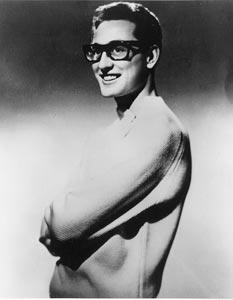 if i could change one thing in rock & roll history....buddy's plane would have never left the ground..... |
||
|
|
Historian |
this is pure songwriting genius, in a nutshell. would that more songwriters would adhere to this philosophy..... |
||
|
| Previous Topic | Next Topic | powered by groupee community |
 | Please Wait. Your request is being processed... |
|
|||
| Site | BuddyHolly.com Community | ||
| Servlet | eve2da022 | ||
| Version | 1.2.12 build 8513 | ||
| Module | Forums 4.0.3 | ||
| Stylesheet | "bh" | ||
| Wordlet Set | "Default Wordlet Set" | ||

|